Reflective surface testing
Experimental installations exploring how high-albedo materials reduce solar heat absorption on rooftops and outdoor structures.
The California programme laid many of the scientific foundations that helped shape MEER's later cooling technologies and international field programmes.
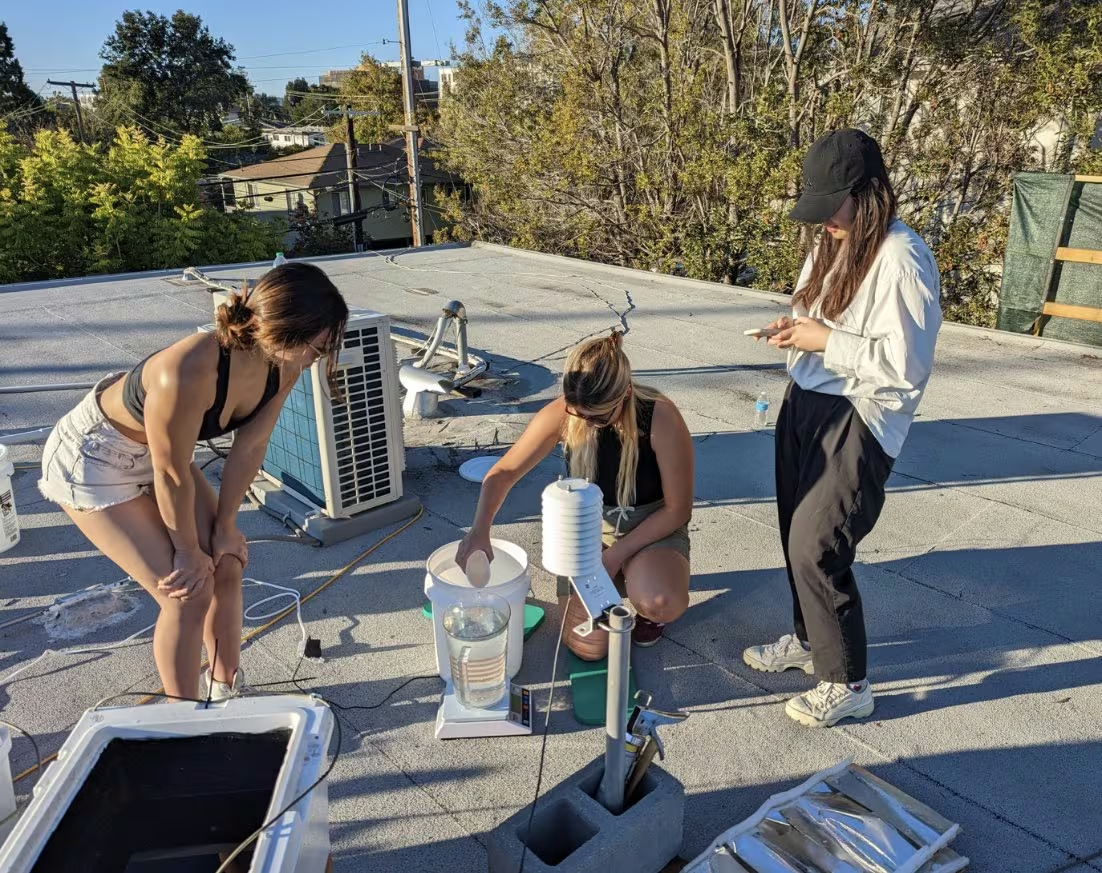
California was one of MEER's earliest experimental research sites — a place to test ideas, build instrumentation, and understand how reflective surfaces behave in the real world. Although it is no longer an operational project, the concepts, experiments and lessons learned here directly informed the field programmes MEER now runs internationally.
We present California as an important milestone in MEER's research journey rather than an ongoing field programme.
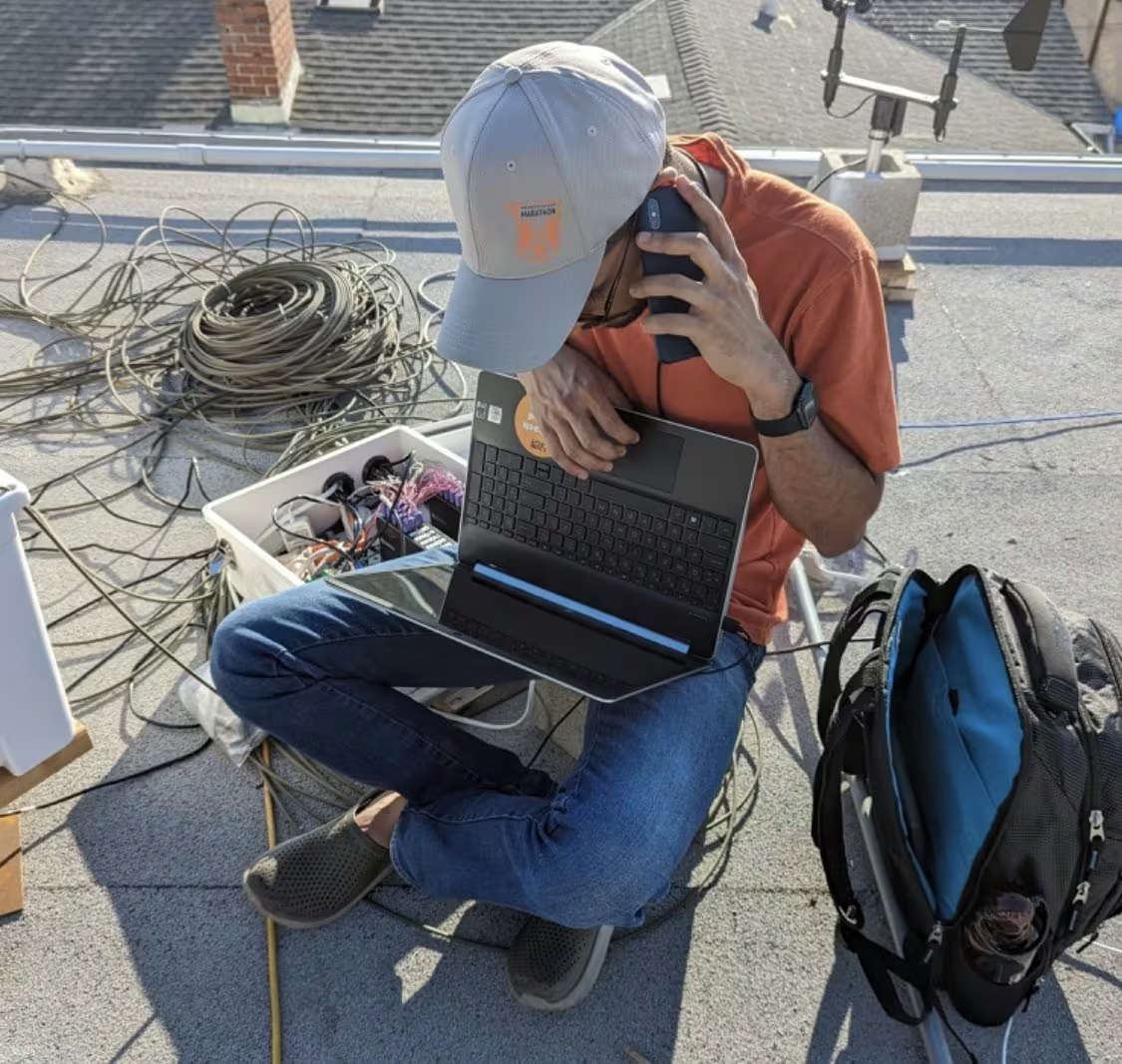
California's long, hot summers, intense solar radiation and strained water resources made it a natural place to explore how surface reflectivity could reduce heat in both built and natural environments.
The state's rooftops offered ready testbeds for reflective materials, while its dependence on limited freshwater made water-surface cooling an equally important research question. Both threads shaped MEER's scientific direction.
“California is where MEER's science was stress-tested for the first time — the starting point of a much larger global journey.”
This thermal drone footage captures one of MEER's early experimental rooftop installations in California.
The drone is using a thermal imaging camera. Thermal cameras measure emitted heat rather than visible light. Darker colours represent cooler rooftop surfaces, while brighter colours represent hotter surfaces. The large temperature difference demonstrates how reflective surfaces can substantially reduce solar heat absorption.
Darker areas — Cooler rooftop surfaces with highly reflective materials. Far less heat is being absorbed.
Brighter colours — Hotter surfaces absorbing more solar heat. These are the surrounding, less reflective areas.
The difference — The large temperature gap demonstrates how reflective surfaces can substantially reduce solar heat absorption.
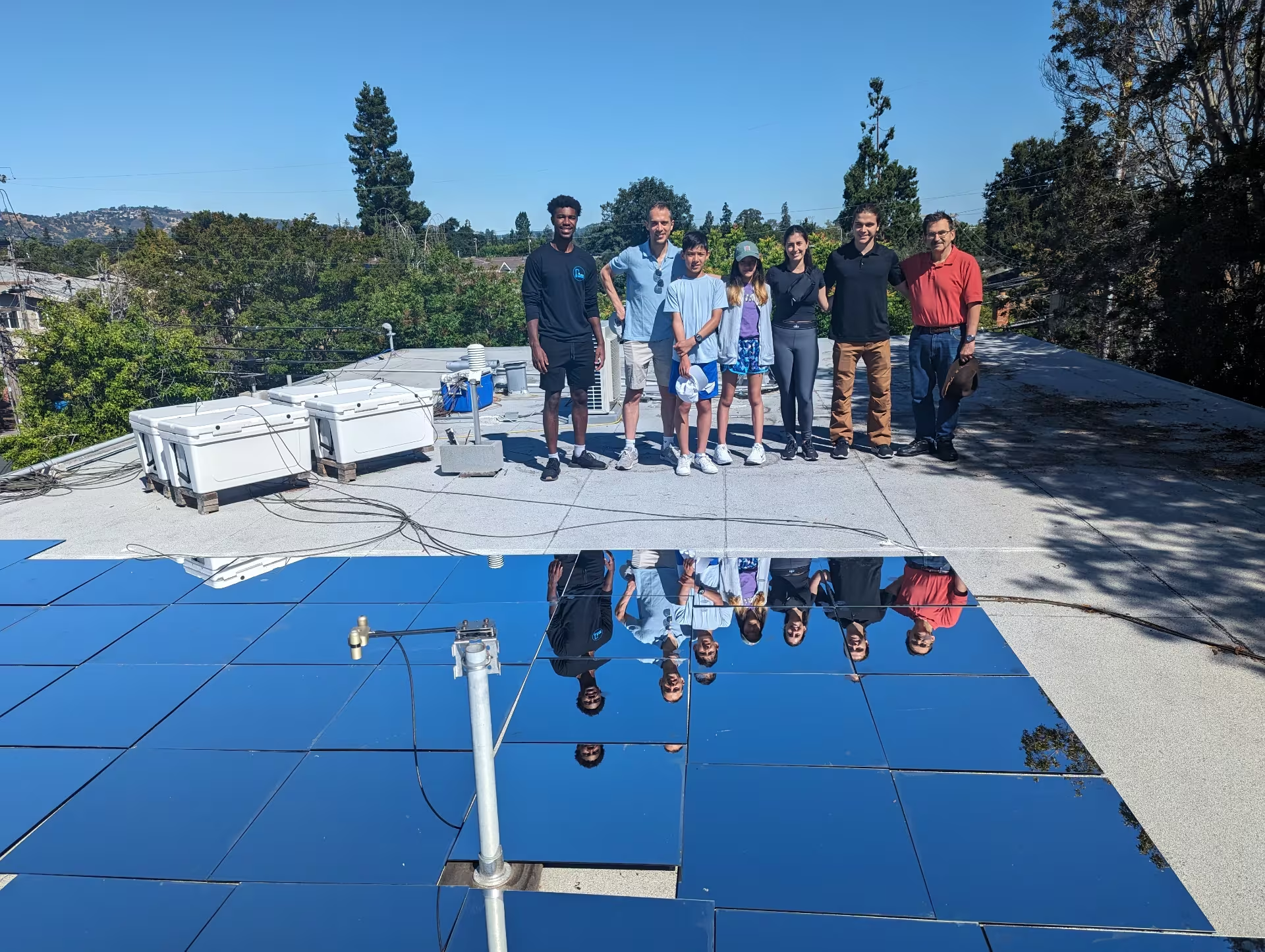
Although these early experiments used glass mirrors as part of the research programme, the knowledge gained helped guide the development of the safer, lighter and more practical reflective materials used by MEER today.
California's programme spanned surface materials, water bodies, instrumentation and measurement — a portfolio of experiments designed to interrogate the fundamentals of reflective cooling.
Experimental installations exploring how high-albedo materials reduce solar heat absorption on rooftops and outdoor structures.
Investigations into whether increasing surface reflectivity could slow evaporation and reduce heat gain across water bodies.
Early proof-of-concept work using glass mirrors to validate the underlying physics of high-reflectivity cooling — since superseded by safer, lighter materials.
Continuous logging of surface, air and water temperatures with dedicated rooftop instrumentation and sensor arrays.
Iterative comparison of reflective materials — the groundwork that led to the lightweight aluminium and PET-based systems used today.
Evidence and lessons from California that directly informed later community-scale deployments across Africa and Asia.
California is where MEER first characterised the performance of a wide range of reflective surfaces under real solar loading. The work combined optical measurement, rooftop instrumentation and long-duration exposure trials.
The programme deliberately tested a spectrum of materials — including arrays of glass mirrors — to understand the ceiling of what high-albedo surfaces could achieve, and to isolate which properties mattered most for community deployment.
Some of MEER's earliest work used glass mirrors to investigate the physics of highly reflective surfaces. It's important to be precise about what this work was, and what it wasn't.
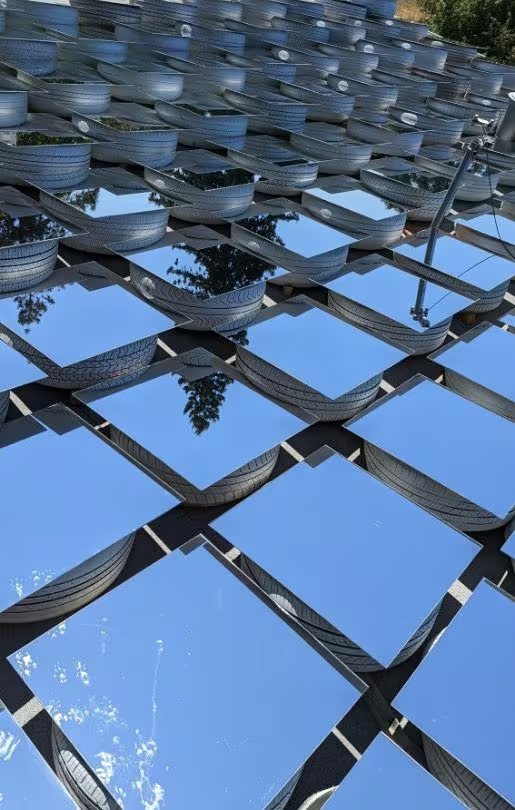
The story here is one of evolution: California established what was scientifically possible; later work found what was practically deployable.
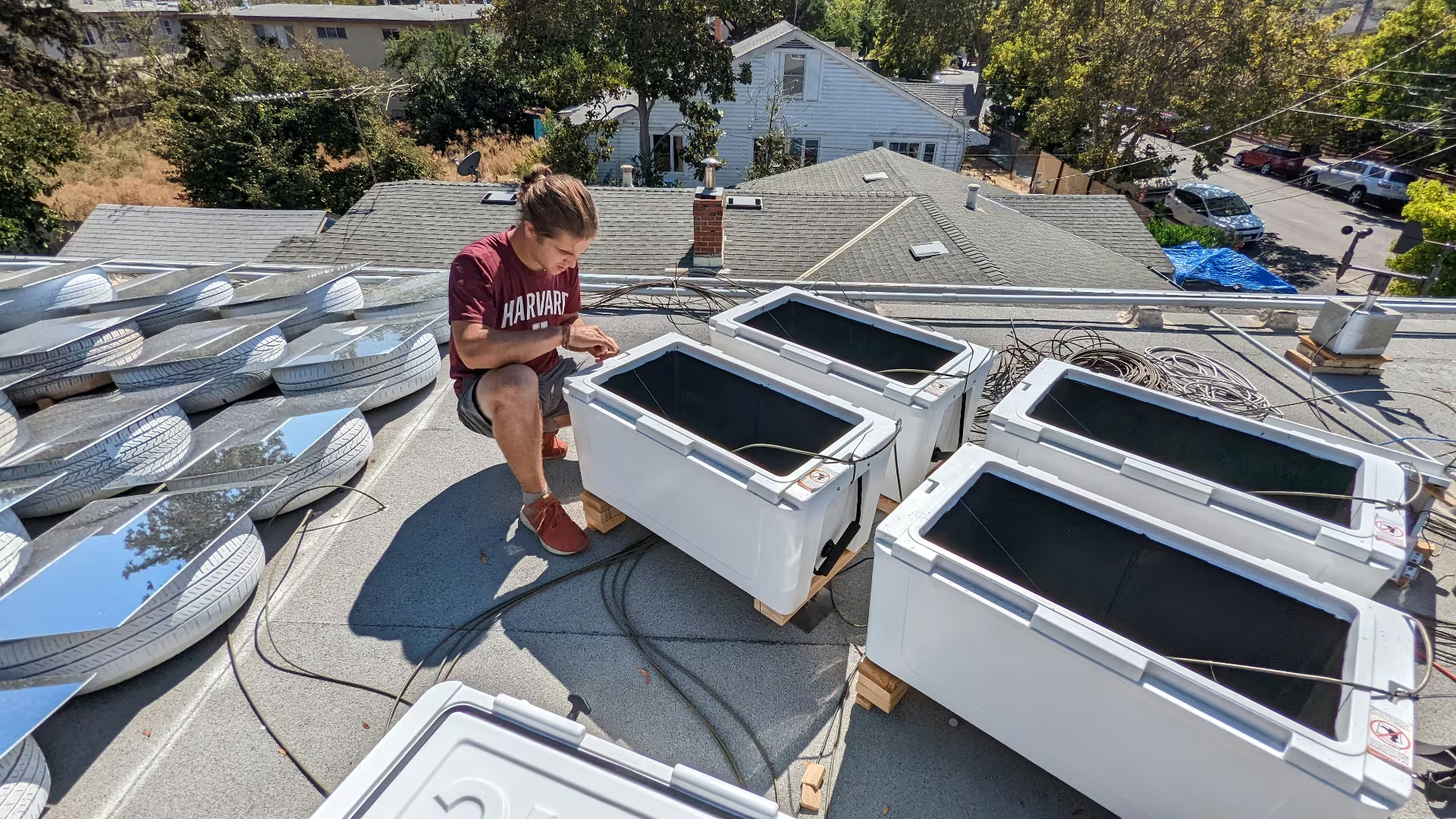
Alongside rooftop work, the California programme investigated whether increasing surface reflectivity could help reduce solar heat absorption across water bodies — with implications for reservoirs, ponds and other exposed water systems.
The results were encouraging early evidence that reflective interventions could meaningfully alter the thermal behaviour of open water — an important step in a research area that remains scientifically active today.
California taught MEER that reflective interventions can meaningfully alter surface temperatures — but that the choice of material, geometry and deployment method matters as much as the physics itself. That insight defined every programme that followed.
California provided valuable experimental evidence which informed almost every strand of MEER's subsequent work.
Baseline measurements and testing methods later applied to community-scale reflective rooftop deployments.
Early evidence that shaped the shift from glass mirrors toward the aluminium and PET-based materials used today.
Validation of low-energy, non-refrigerant cooling as a viable direction for heat-vulnerable environments.
Lessons carried directly into MEER's programmes in Sierra Leone, Tanzania, India and beyond.
A reference point for continuing research into next-generation reflective coatings and radiative cooling surfaces.
Instrumentation approaches and monitoring methods refined in California still underpin how MEER studies field sites today.
A short timeline showing how California's early experiments connect to MEER's international field programmes today.
First rooftop testbeds established in the Bay Area to investigate high-albedo cooling under real climatic conditions.
Systematic evaluation of reflective surfaces, layouts and coverage — including glass-mirror proof-of-concept arrays.
Experiments exploring reflective interventions over water surfaces to reduce heat absorption and evaporation.
Transition away from glass mirrors toward lighter, safer, lower-cost reflective materials suited to community deployment.
Lessons carried into full-scale field programmes serving heat-vulnerable communities.
Active field work across Africa and Asia — including Sierra Leone, Tanzania and India — building on the California foundations.
Click or tap any image to open the full-screen lightbox. Use ← and → to navigate, or swipe on mobile.
Every deployment, measurement, publication and sibling project links back to a shared scientific graph. Follow any thread to keep exploring.
California is the starting point of a much larger global journey. Explore MEER's active international programmes and the science that continues to build on this foundation.
Explore all projects