High reflectivity
Maximize solar reflectance across the full solar spectrum.
MEER's Passive Daytime Radiative Cooling (PDRC) paint is currently under development through our materials science research program in China. Laboratory optimization continues alongside durability and performance testing, with the goal of developing a coating that combines exceptional solar reflectivity, genuine durability and affordability.
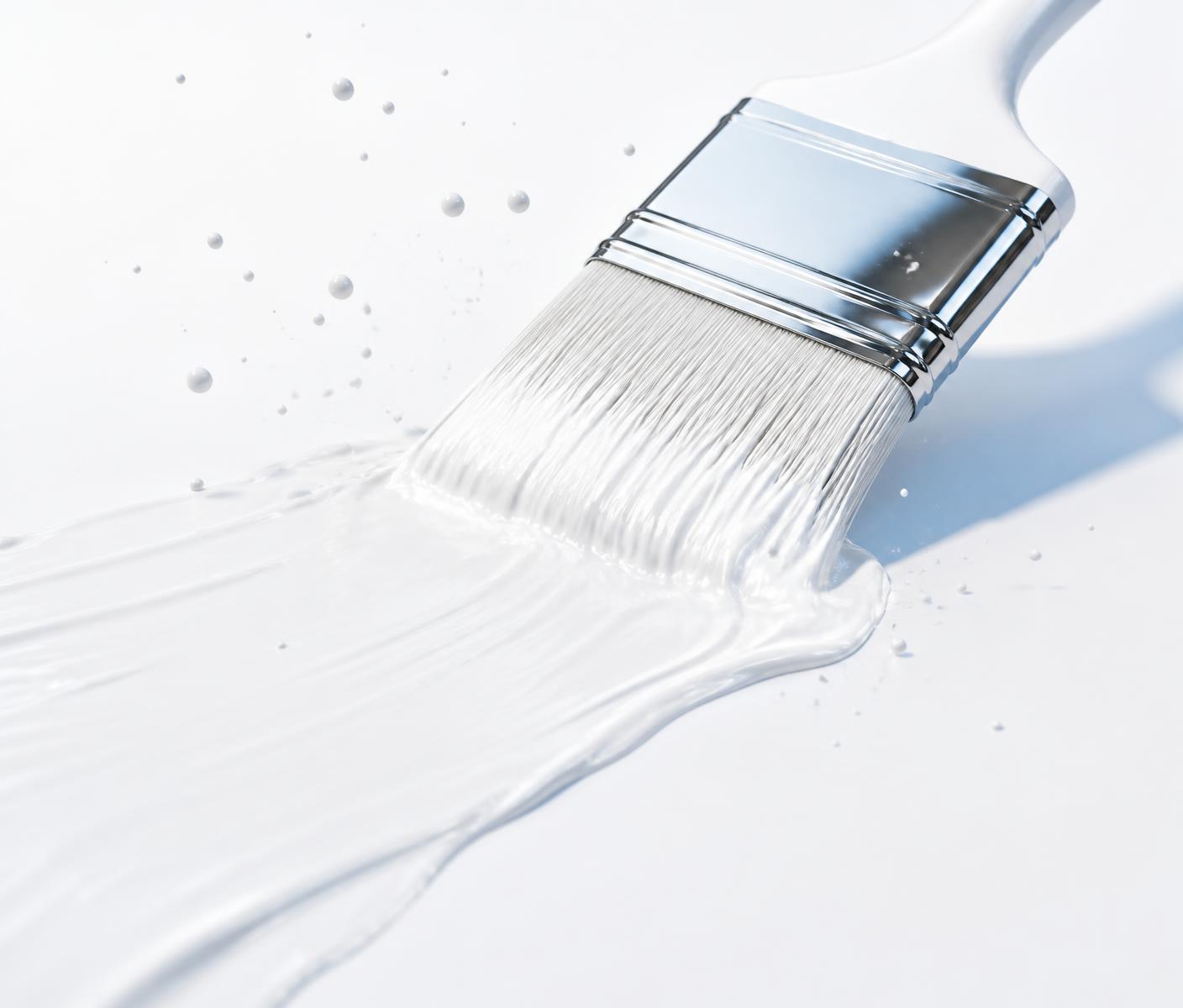
Maximize solar reflectance across the full solar spectrum.
Maintain performance under UV exposure, dust, rainfall and thermal cycling.
Use widely available raw materials and simple processing.
Compatible with brush, roller and low-pressure spray.
Suitable for deployment across both the Global South and the Global North alike.
A surface in sunlight gains energy from the sun and loses energy by radiating heat back out. A passive daytime radiative cooling surface is engineered to do two things at the same time: reflect almost all incoming sunlight, and emit strongly in the mid-infrared — particularly in the 8–13 µm “atmospheric window” where thermal radiation escapes to cold space.
When the outgoing radiation exceeds the absorbed sunlight, the surface cools without electricity, refrigerant or moving parts. It works in daylight, and it keeps working as long as the sky is open.
At planetary scale, brightening surfaces also raises albedo — the fraction of sunlight Earth returns to space — which is the mechanism at the heart of MEER's mission.
Engineered particle sizes and refractive index contrast scatter visible and near-infrared sunlight before it can be absorbed.
The binder and fillers are selected to radiate strongly in the mid-infrared, sending heat through the atmospheric window.
Net energy leaves the surface. Roof and interior temperatures fall without electricity, refrigerant or maintenance.
Formulations are iterated and characterized at our laboratory in China for optical and thermal performance, with durability and weathering testing running in parallel. Research and product development advance together — each cycle informs the next formulation.
The objective is a coating that combines high reflectivity, real-world durability and low manufacturing cost, because a cooling coating that only wealthy buyers can afford will not solve the problem we exist to solve.
No batch leaves the lab as a product; it leaves as evidence.
PDRC paint is an active research and product development program. Formulations are iterated in the laboratory and tested for optical performance, durability and weathering in parallel.
Performance figures will be published only after independent field validation.
These are intended deployment environments, not commercial claims. Each will require instrumented field validation before it is described as proven.
Low-cost roofs and walls in hot, energy-poor communities.
Cooler public buildings without air conditioning.
Warehouses, cold chain sheds and grain stores.
Large low-slope surfaces with high solar exposure.
Candidate pigments, binders and fillers screened for reflectance and emissivity.
Accelerated UV, humidity, abrasion and thermal cycling on shortlisted formulations.
Brush, roller and low-pressure spray application on representative substrates.
Roof-scale deployments with surface and indoor temperature monitoring.
Third-party measurement of reflectance, emissivity and delivered cooling.
Ordinary white paint is designed to look white to the human eye. A PDRC coating is engineered across the whole solar spectrum, including the near-infrared where roughly half of the sun's energy arrives, and is also tuned to emit strongly in the mid-infrared so heat can escape to space.
MEER works with laboratories, manufacturers and field partners to develop, test and validate passive cooling materials.