Exploring bamboo as a low-carbon construction material for passive cooling
MEER's Pune team is investigating bamboo — widely available across India and long used in local building traditions — as a low-carbon material for shading canopies and rooftop passive cooling structures.
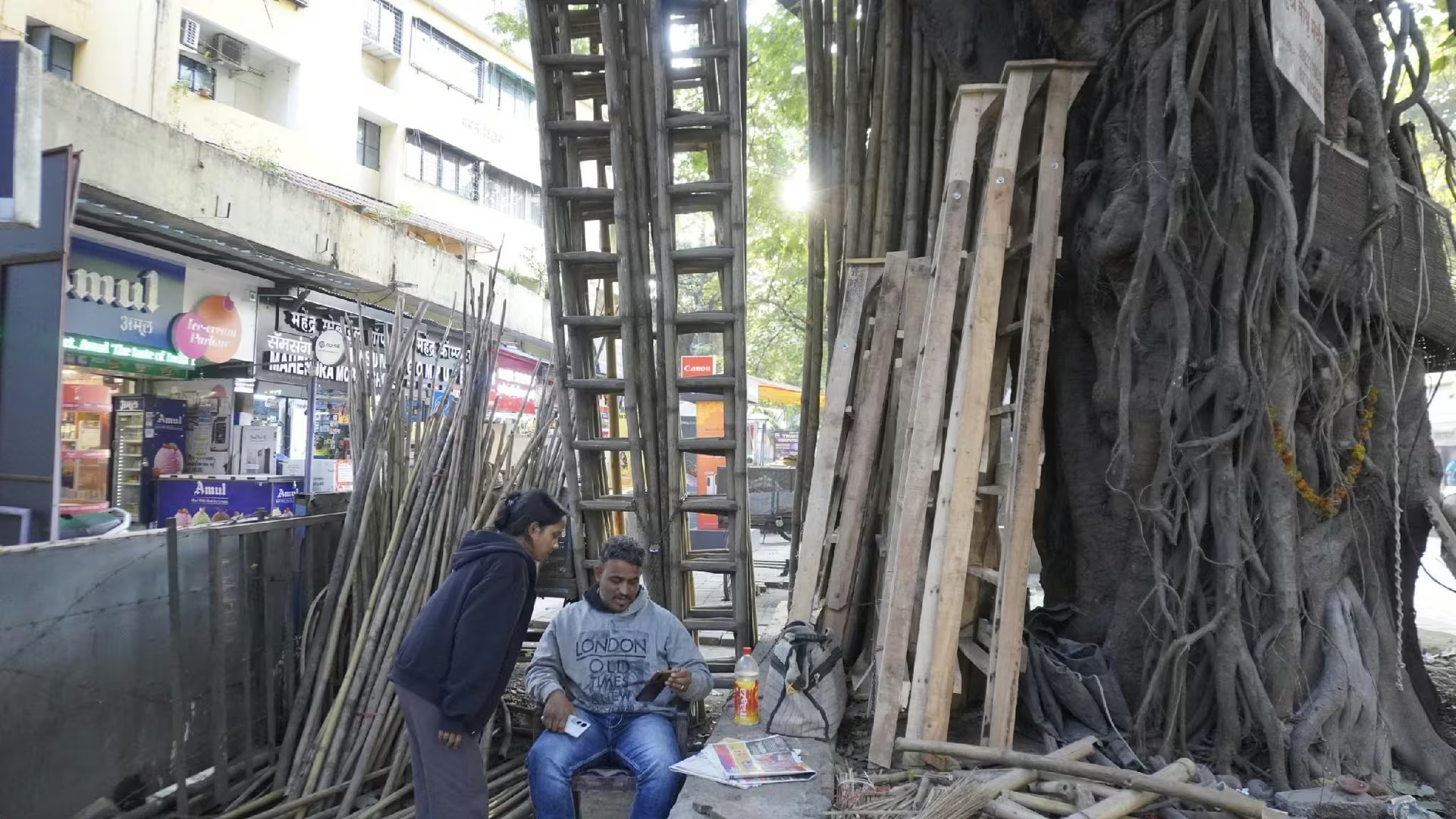
MEER's research in India continues into 2026, reflecting the country's central importance in both the climate crisis and the search for practical, scalable solutions. India is experiencing some of the most intense heat stress anywhere in the world, making it a critical setting for the development of climate adaptation approaches that are affordable, locally grounded and capable of operating at scale.
As part of this effort, MEER's team in Pune has been exploring the use of bamboo as a potential construction material for passive cooling systems. Bamboo is widely available across many parts of India and has long been used in local building traditions, making it a promising candidate for low-carbon cooling structures such as shading canopies and rooftop installations.
Recent market research focused on identifying which bamboo species are most commonly available and suitable for experimental builds. The team found that Dendrocalamus strictus is the most prevalent species in local supply chains, reinforcing its potential role in future trial projects. The research aimed not at procurement, but at understanding availability, consistency and practical suitability for on-the-ground experimentation.
Looking ahead, MEER plans to carry out further bamboo-based experiments in India over the coming year, testing how these materials can be integrated into passive cooling designs alongside reflective and shading elements. India's scale and climate exposure make it a crucial partner in this work — not only as a site of risk, but as a source of innovation and leadership in climate-resilient design.