A history of climate discovery.

Three centuries of science, condensed into a walking tour. Each entry is a person, a moment or a document that changed how we understand the atmosphere — and how much time we have left to act.

Climate change is not a recent idea. In 1824 a French mathematician noticed that Earth was warmer than physics said it should be. Thirty years later, an American woman heated a jar of carbon dioxide in sunlight and wrote down what it meant. A hundred and seventy years later, we are living with the answer.

This page is a living archive. Scroll through the discoveries, hear the historic testimonies, read the papers, watch the numbers rise. New entries are added as the story continues.

The story of climate science

  1. 1754
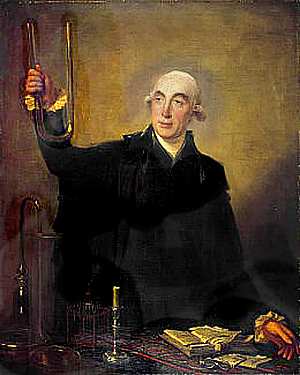
    Portrait of Joseph Black
    Foundations · 1754

    Joseph Black

    Scottish chemist

    Physician and chemist at Glasgow and Edinburgh who isolated and characterised a new gas released from heated limestone.

    Contribution

    Identified carbon dioxide — which he called 'fixed air' — as a distinct component of the atmosphere.

    Why it matters

    The first isolation of CO₂ made the modern chemistry of the atmosphere possible. Everything that follows on the greenhouse effect depends on knowing this gas exists.
  2. 1824
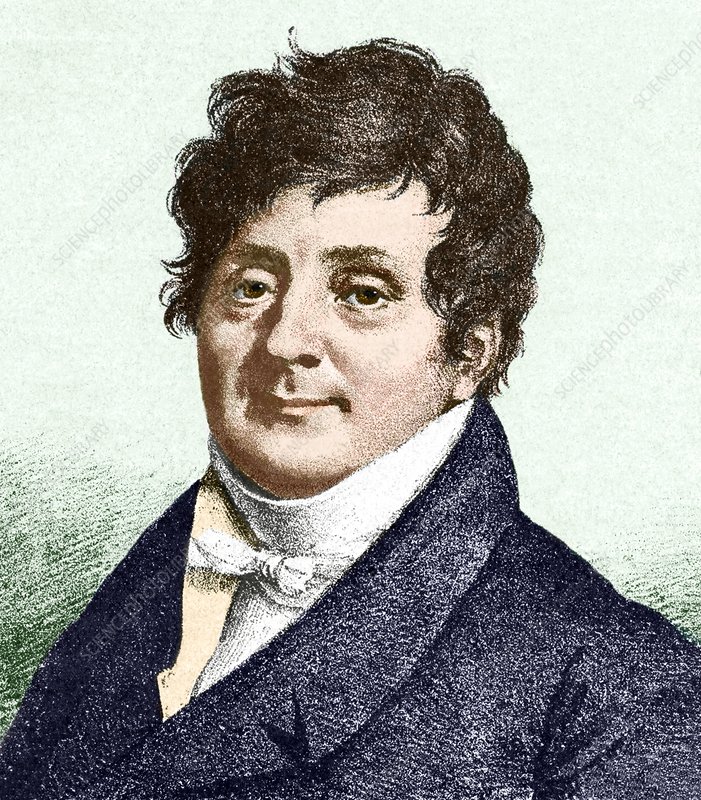
    Portrait of Joseph Fourier
    Foundations · 1824

    Joseph Fourier

    French mathematician & physicist

    One of the great mathematical physicists of the 19th century, best known for the Fourier series.

    Contribution

    Calculated that Earth should be far colder than it is given its distance from the Sun, and proposed that the atmosphere retains heat — the first description of what we now call the greenhouse effect.

    Why it matters

    Fourier framed the central question of climate science: what keeps Earth warm enough to be habitable? Every subsequent theory of climate is an answer to it.

    "The temperature of the Earth can be augmented by the interposition of the atmosphere, because heat in the state of light finds less resistance in penetrating the air than in re-passing into the air when converted into non-luminous heat."

    Remarques Générales sur les Températures du Globe Terrestre, 1824
  3. 1856
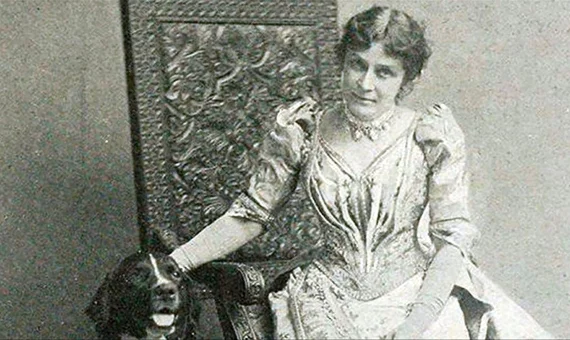
    Portrait of Eunice Newton Foote
    Foundations · 1856

    Eunice Newton Foote

    American scientist & women's rights advocate

    An amateur scientist in New York State whose paper was read at the American Association for the Advancement of Science — the first physics paper by an American woman.

    Contribution

    Performed the first laboratory experiments showing that carbon dioxide traps more heat from sunlight than ordinary air. Concluded that a CO₂-rich atmosphere would give the Earth a higher temperature.

    Why it matters

    Foote experimentally demonstrated CO₂'s heat-trapping property three years before Tyndall. Her work was forgotten for over a century and has only recently been restored to the historical record.

    "An atmosphere of that gas would give to our earth a high temperature… an increased weight must have necessarily resulted."

    Circumstances Affecting the Heat of the Sun's Rays, 1856
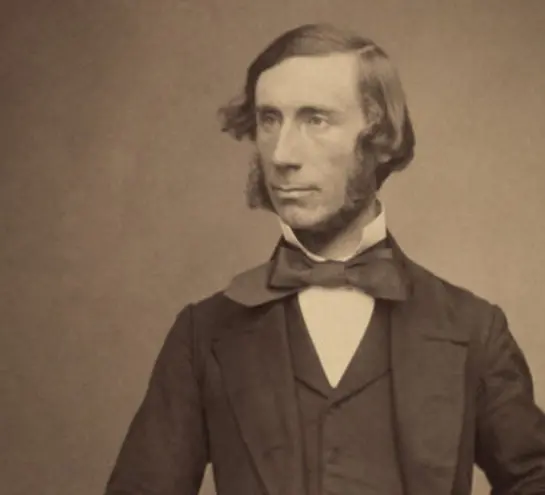
  4. 1859
    Portrait of John Tyndall
    Foundations · 1859

    John Tyndall

    Irish physicist

    Superintendent of the Royal Institution in London and a gifted experimentalist and communicator of science.

    Contribution

    Using a precision ratio spectrophotometer of his own design, measured the infrared absorption of water vapour, carbon dioxide, methane and ozone — proving quantitatively that these gases trap heat.

    Why it matters

    Tyndall put the greenhouse effect on rigorous experimental footing. His measurements identified the specific gases responsible and opened the door to calculating how much a change in their abundance would matter.

    "This aqueous vapour is a blanket more necessary to the vegetable life of England than clothing is to man."

    On Radiation through the Earth's Atmosphere, 1863
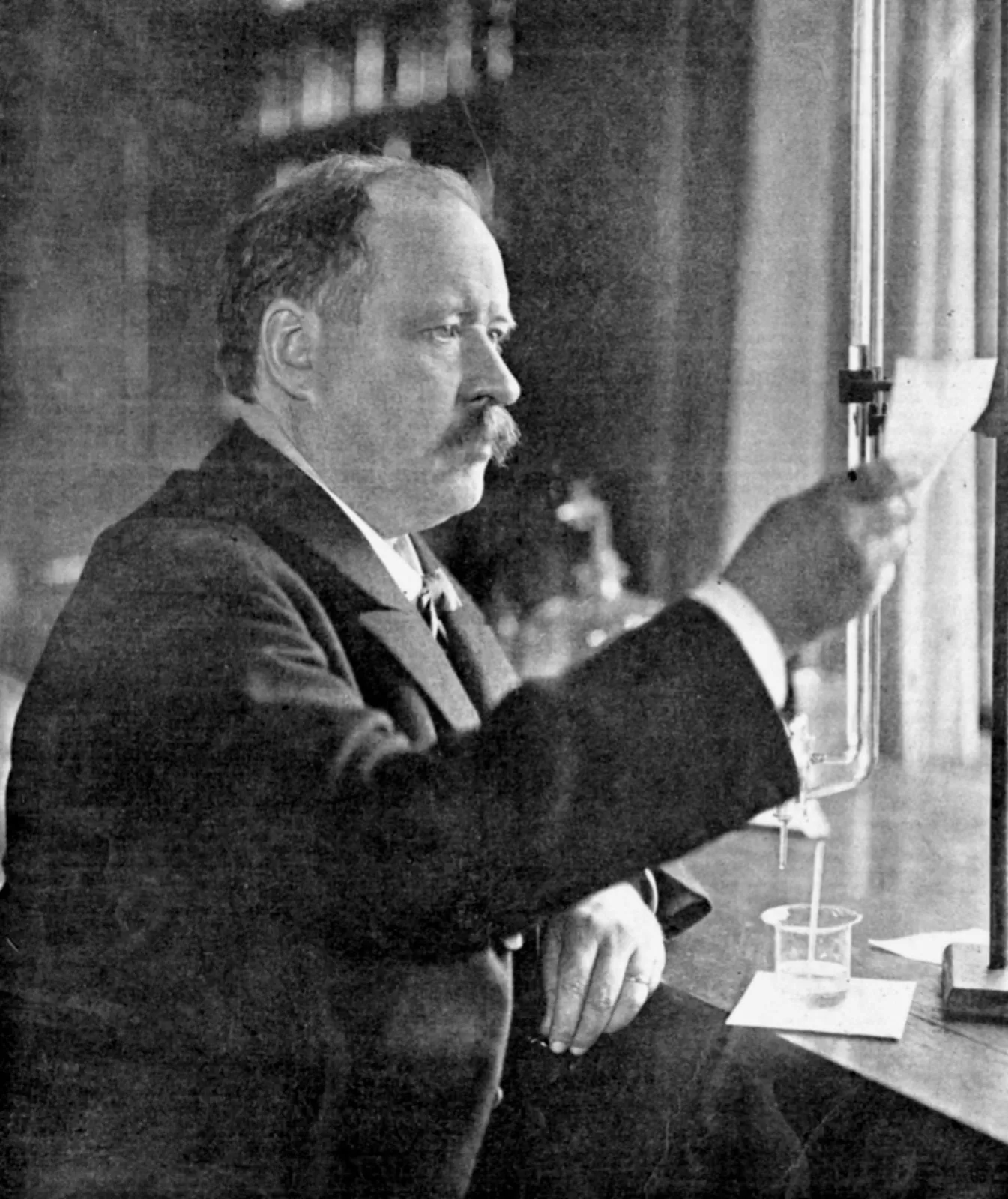
  5. 1896
    Portrait of Svante Arrhenius
    Quantifying · 1896

    Svante Arrhenius

    Swedish physical chemist, Nobel laureate

    Founder of physical chemistry who won the 1903 Nobel Prize for his theory of electrolytic dissociation.

    Contribution

    Made the first quantitative calculation of climate sensitivity — estimating that doubling atmospheric CO₂ would warm the surface by 5–6 °C.

    Why it matters

    Arrhenius transformed the greenhouse effect from a qualitative idea into a predictive theory. His calculation is remarkably close to today's best estimate of 2.5–4 °C per doubling.

    "We are evaporating our coal mines into the air."

    Attributed, on industrial CO₂ emissions
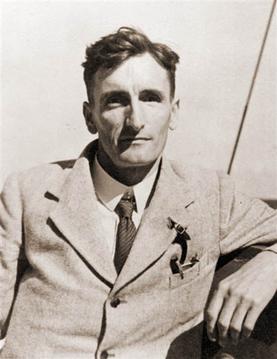
  6. 1938
    Portrait of Guy Stewart Callendar
    Quantifying · 1938

    Guy Stewart Callendar

    British steam engineer

    An amateur meteorologist who compiled temperature records from around the world in his spare time.

    Contribution

    Showed that global land temperatures had risen ~0.3 °C over the previous half-century and linked the warming to rising CO₂ from fossil fuel combustion.

    Why it matters

    The 'Callendar Effect' was the first empirical case that human emissions were already warming the planet. Largely dismissed at the time, it was vindicated by every subsequent dataset.

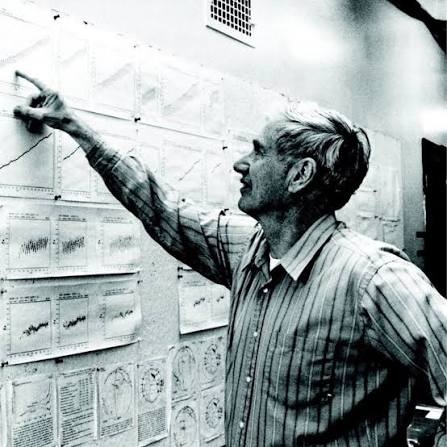
  7. 1958
    Portrait of Charles David Keeling
    Measuring · 1958

    Charles David Keeling

    American geochemist

    Scripps geochemist who devised instruments capable of measuring atmospheric CO₂ with unprecedented precision.

    Contribution

    Began continuous measurements of atmospheric CO₂ at Mauna Loa Observatory, Hawaii — producing the 'Keeling Curve', the single most iconic dataset in Earth science.

    Why it matters

    For the first time, the world could watch CO₂ rise year on year in real time. The Keeling Curve made abstract theory undeniable and grounds every climate policy debate today.

    "Uninterrupted observations from a single station… have provided the strongest evidence that CO₂ in the atmosphere is increasing."

    C. D. Keeling
  8. 1957
    Portrait of Roger Revelle
    Measuring · 1957

    Roger Revelle

    American oceanographer

    Director of Scripps and a leading figure in post-war geophysics who mentored Keeling and, later, a young Al Gore.

    Contribution

    With Hans Suess, showed that the oceans cannot absorb CO₂ as fast as humans emit it — meaning fossil emissions must accumulate in the atmosphere.

    Why it matters

    Framed industrial civilisation as a 'large-scale geophysical experiment' with no historical precedent, making atmospheric monitoring a scientific imperative.

    "Human beings are now carrying out a large scale geophysical experiment of a kind that could not have happened in the past nor be reproduced in the future."

    Revelle & Suess, 1957
  9. 1965
    '65
    Warning · 1965

    US Presidential Science Advisory Committee

    Johnson administration report

    The first time a head of government was formally warned about human-caused climate change.

    Contribution

    The report 'Restoring the Quality of Our Environment' included an appendix predicting that CO₂ from fossil fuels would 'modify the heat balance of the atmosphere' with significant climatic effects by 2000.

    Why it matters

    The warning existed in the highest levels of government sixty years ago. The scientific case never required strengthening — only listening.

  10. 1967
    Portrait of Syukuro Manabe
    Modelling · 1967

    Syukuro Manabe

    Japanese-American climatologist, Nobel laureate

    Princeton climatologist who joined the US Weather Bureau in 1958 and pioneered numerical modelling of the atmosphere.

    Contribution

    With Richard Wetherald, built the first climate model coupling radiation, convection and water vapour feedback. Predicted 2 °C of warming for a doubling of CO₂.

    Why it matters

    Manabe's model produced the physical framework every modern climate simulation still uses. It earned him the 2021 Nobel Prize in Physics.

  11. 1979
    '79
    Warning · 1979

    The Charney Report

    US National Academy of Sciences

    A panel led by MIT meteorologist Jule Charney convened to assess CO₂'s climate impact.

    Contribution

    Concluded that doubling atmospheric CO₂ would warm the planet by 1.5–4.5 °C — a range that has barely shifted in 45 years despite orders-of-magnitude increases in computing power.

    Why it matters

    The Charney Report is the moment mainstream science formally converged on today's climate sensitivity. Everything since has been confirmation, not revision.

  12. 1985
    Portrait of Carl Sagan
    Warning · 1985

    Carl Sagan

    American astronomer & science communicator

    Cornell astronomer whose work on Venus provided the definitive natural laboratory for a runaway greenhouse effect.

    Contribution

    Testified before the US Congress in 1985, warning explicitly about the dangers of anthropogenic CO₂ emissions and the greenhouse effect on Earth.

    Why it matters

    Sagan brought climate change into the public consciousness with unmatched clarity, connecting planetary science to civilisational choices.

    "The trouble is that we have also, inadvertently, been performing an experiment on the Earth's atmosphere on a global scale."

    Testimony before Congress, 1985
  13. 1988
    Portrait of James Hansen
    Warning · 1988

    James Hansen

    NASA climatologist

    Director of NASA's Goddard Institute for Space Studies and one of the most prominent public voices for climate science.

    Contribution

    Testified before the US Senate on 23 June 1988, stating with 99% confidence that global warming had begun and was human-caused.

    Why it matters

    Hansen's testimony — delivered during a record heatwave — turned climate change from a scientific projection into a live political issue. It launched a generation of climate policy.

    "It is time to stop waffling so much and say that the evidence is pretty strong that the greenhouse effect is here."

    US Senate testimony, 23 June 1988
  14. 1988
    IP
    Policy · 1988

    IPCC Established

    WMO & UNEP

    The Intergovernmental Panel on Climate Change was created to provide governments with regular assessments of climate science, impacts and response options.

    Contribution

    For the first time, thousands of scientists worldwide coordinated to produce consensus assessments of the state of climate knowledge.

    Why it matters

    The IPCC turned climate science into a global public good and remains the authoritative reference for every international negotiation.

  15. 1990s
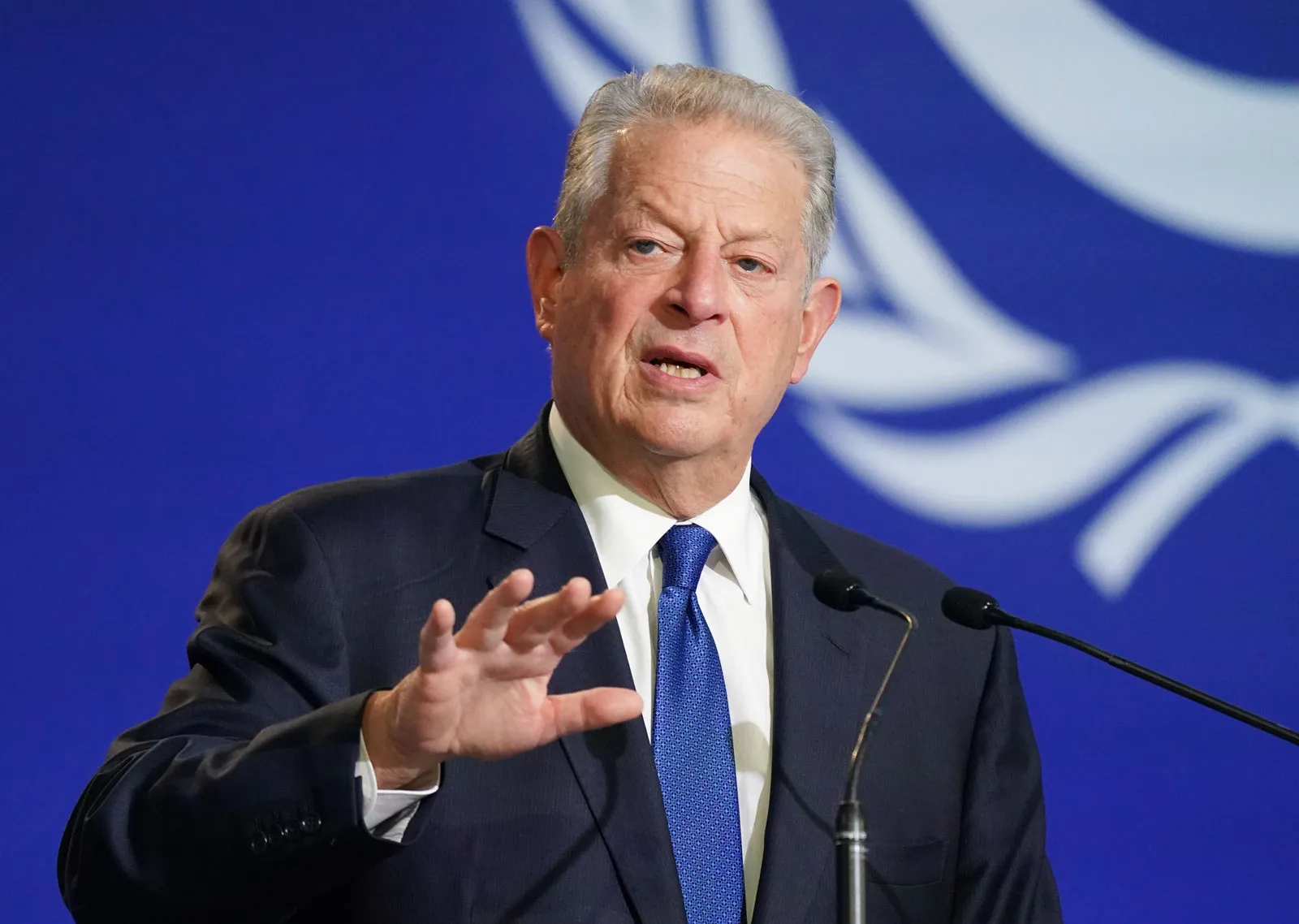
    Portrait of Al Gore
    Warning · 1990s

    Al Gore

    US Senator, Vice President, Nobel laureate

    A tireless political communicator of climate science, mentored as a student by Roger Revelle.

    Contribution

    Chaired some of the earliest US Senate hearings on the greenhouse effect and made climate change a mainstream political issue through decades of advocacy, books and film.

    Why it matters

    Gore translated the science for a global audience. His work — culminating in An Inconvenient Truth and a shared Nobel Peace Prize with the IPCC — reshaped public understanding.

    "The climate crisis is not a political issue; it is a moral and spiritual challenge to all of humanity."

    Al Gore
  16. 1992
    '92
    Policy · 1992

    Rio Earth Summit

    UN Conference on Environment & Development

    A landmark UN summit in Rio de Janeiro attended by 172 governments.

    Contribution

    Produced the UN Framework Convention on Climate Change (UNFCCC), the treaty under which every subsequent climate negotiation — from Kyoto to Paris — has been conducted.

    Why it matters

    Rio embedded climate change into international law and created the machinery of global cooperation.

  17. 1997
    '97
    Policy · 1997

    Kyoto Protocol

    UNFCCC agreement

    The first internationally binding emissions-reduction treaty, adopted in Kyoto in 1997 and in force from 2005.

    Contribution

    Committed industrialised nations to specific emissions reductions relative to 1990 levels.

    Why it matters

    Kyoto proved that binding climate commitments were possible — and exposed the political fragility of enforcing them.

  18. 2015
    '15
    Policy · 2015

    Paris Agreement

    UNFCCC COP21

    Adopted by 196 parties in December 2015 and in force from November 2016.

    Contribution

    Committed nations to hold global warming 'well below 2 °C' above pre-industrial levels and to pursue efforts to limit it to 1.5 °C.

    Why it matters

    The 1.5 °C target reframed climate ambition worldwide and set the benchmark against which every current pledge is measured.

  19. 2021–2023
    AR
    Modern · 2021–2023

    IPCC Sixth Assessment Report

    AR6

    The most comprehensive climate assessment ever produced, synthesising the work of hundreds of scientists across three working groups.

    Contribution

    Concluded unequivocally that human influence has warmed the climate, and that the window to limit warming to 1.5 °C is closing rapidly.

    Why it matters

    AR6 removed any remaining scientific ambiguity. The uncertainty is no longer about the science — it is about the response.

    "It is unequivocal that human influence has warmed the atmosphere, ocean and land."

    IPCC AR6 WGI Summary for Policymakers, 2021
  20. 2020s
    Modern · 2020s

    The Satellite & Attribution Era

    Modern observational climatology

    A new generation of Earth-observing satellites and attribution science now measures the climate in near real time.

    Contribution

    Missions such as OCO-2/3, GRACE-FO, MethaneSAT and Sentinel-6 monitor CO₂, methane, ice mass and sea level directly from orbit. Attribution studies quantify the human fingerprint on individual heatwaves, floods and wildfires within days.

    Why it matters

    The debate has moved from whether the climate is changing to how fast we can respond. MEER's work — surface cooling, high-resolution sensing and community-scale intervention — belongs to this era of measured, actionable science.

What the numbers show

Every figure below is drawn from the original scientific datasets. Hover the charts for exact values, expand any chart to explore, or click a statistic to open the evidence behind it — with links to peer-reviewed research and the institutions that produced the data.

The Keeling Curve

Monthly-mean atmospheric CO₂ at Mauna Loa Observatory, Hawaii — the longest continuous CO₂ record on Earth.

32035038041019581970198019902000201020202023
Source · NOAA GML · Scripps CO₂ ProgramUpdated · November 2024Version · NOAA GML v2024 · Scripps annual means

Global temperature anomaly

Deviation from the 1951–1980 mean. Red = warmer than baseline, blue = cooler.

-0.50+0.5+1+1.51880192019601990201020202024
Source · NASA GISS · GISTEMP v4Updated · January 2025Version · GISTEMP v4 (annual, land+ocean)

Earth's Energy Imbalance

Annual mean net heat uptake at the top of atmosphere. Recent CERES observations show the imbalance has more than doubled since the early 2000s, with 2023 reaching approximately +1.8 W/m². About 89% of this excess energy is absorbed by the ocean.

0.00.51.01.52.0Long-term avg ≈ 1.0 W/m²200120052010201420182020202120222023
Ocean
89%
Land
6%
Ice
4%
Atmos.
1%
Distribution of Earth's accumulated heat, 1971–2020 (IPCC AR6 WG1 Ch. 7 / von Schuckmann et al.)
Source · NASA CERES · Argo · IPCC AR6Updated · CERES EBAF Ed4.2 · 2024Version · CERES EBAF Ed4.2 + OHC (0–2000 m)
Institutional sources

All statistics on this page link back to primary sources. If a figure changes with a new annual release, this page is updated accordingly.

They told us. On camera. Under oath.

Long before climate change became a political dividing line, scientists and statesmen delivered clear, sober warnings in public hearings — often decades before the effects became visible in ordinary life.

1985 · US Congress

Carl Sagan

Context

Delivered during hearings on the environment, Sagan drew on his planetary-science expertise — including his pioneering work on Venus — to warn that Earth was running an unprecedented atmospheric experiment.

Key message

Rising CO₂ from fossil fuels would warm the planet, and the effects would compound over decades. He urged immediate scientific and political attention.

What has happened since

Atmospheric CO₂ has risen from ~345 ppm in 1985 to over 425 ppm today. Global mean temperature is roughly 1.3 °C above the pre-industrial baseline.

1988 · US Senate Committee on Energy & Natural Resources

James Hansen

Context

Testifying on the hottest June day Washington had ever recorded, Hansen told senators — with 99% confidence — that human-caused global warming had begun.

Key message

The warming trend was already detectable, would continue, and would drive more frequent extreme heat, droughts and storms.

What has happened since

Every one of the ten hottest years on record has occurred in the last decade. Hansen's 1988 model projections have proved remarkably accurate.

2009 · House Energy & Commerce Committee

Al Gore

Context

On 24 April 2009, former Vice President Gore testified alongside Senator Warner on the American Clean Energy and Security Act of 2009. The bill proposed cutting CO₂ and other greenhouse gases by 20% by 2020 and by 83% by mid-century, while requiring utilities to generate a quarter of their electricity from renewable sources by 2025. Filmed by C-SPAN. Non-commercial use only.

Key message

Gore called the legislation a moral imperative, comparing its importance to the civil rights laws of the 1960s, and argued that the costs of inaction would far exceed the costs of decisive action.

What has happened since

The Waxman-Markey bill passed the House but stalled in the Senate. US energy-sector emissions have since plateaued, but global emissions continued to rise, leaving the 2020 and mid-century targets unmet.

What was warned. What happened.

Decade after decade, scientific understanding sharpened. Decade after decade, political response fell short. Below, the warnings on the left are matched against what has actually taken place on the right.

  1. 1965
    Warned

    PSAC report: 25% CO₂ increase by 2000 will 'modify the heat balance' and could melt Antarctic ice.

    Happened

    CO₂ rose by ~20% by 2000, exactly as projected. Antarctic and Greenland ice loss now measured in hundreds of billions of tonnes per year.

  2. 1979
    Warned

    Charney Report: doubling CO₂ will warm the planet 1.5–4.5 °C.

    Happened

    CO₂ is on track to double from pre-industrial levels this century; warming to date already sits above 1.3 °C.

  3. 1988
    Warned

    Hansen: extreme heatwaves and drought will become more frequent within decades.

    Happened

    Fatal heatwaves in Europe (2003, 2022, 2023), the Pacific Northwest (2021), India and Pakistan (2022, 2024) — all attributed to human-caused warming.

  4. 1990
    Warned

    IPCC First Assessment: business-as-usual warming of ~0.3 °C per decade.

    Happened

    Observed warming has tracked the projections closely; the last decade is the warmest on record.

  5. 2015
    Warned

    Paris Agreement: exceeding 1.5 °C risks crossing dangerous tipping points.

    Happened

    2024 was the first calendar year to exceed 1.5 °C globally. Coral reefs, ice sheets and permafrost are already showing systemic change.

"The scientific case has never required strengthening — only listening."

Continue the story

The history is written. The next chapter is not.

MEER's work, restoring Earth's reflectivity across cities, agriculture and water bodies, measuring environmental impacts, and developing practical surface cooling solutions—belongs to the modern era of measurable, actionable climate science. By protecting people, ecosystems and critical resources today while contributing to long-term planetary cooling, our work bridges climate adaptation and climate mitigation.