How MEER works
Our Approach
Combining science, engineering and community partnership to deliver practical cooling solutions that work today — while supporting long-term climate resilience.
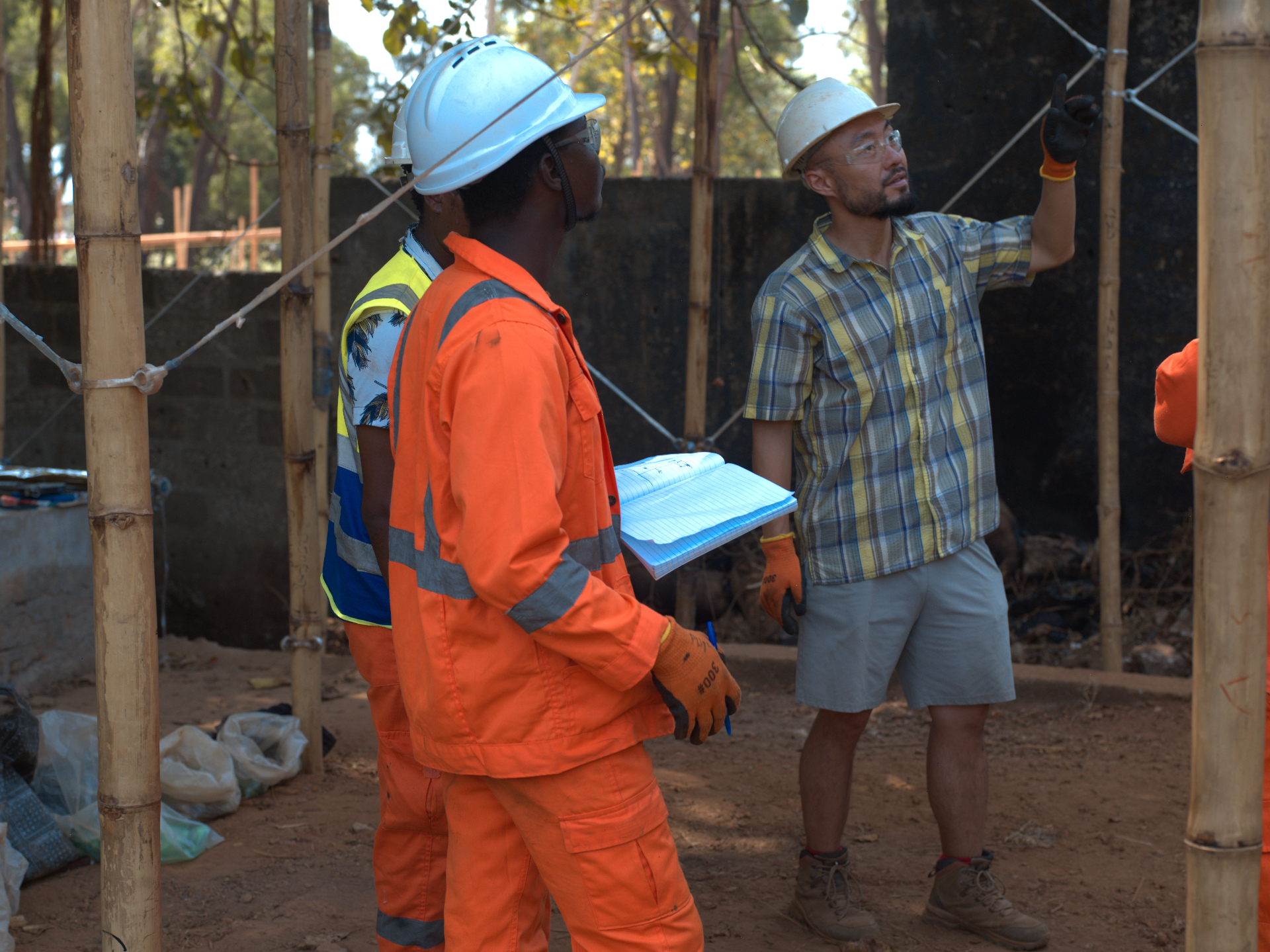
In his own words — the approach, from the field.
A short film from the field in Sierra Leone. Dr Ye Tao walks through the materials, the physics, and the pathway that carries this work from a research bench to a community rooftop.
- Speaker
- Dr Ye Tao
- Role
- Founder · Chief Scientist
- Setting
- Field deployment · Sierra Leone
- Focus
- Materials → deployment
Filmed on location · Sierra Leone
01 · A new kind of approach
The climate challenge cannot be solved by a single answer.
Reducing greenhouse gas emissions remains absolutely essential. It is the foundation of any credible response to climate change and MEER stands firmly behind it.
But emissions reductions alone cannot cool the planet quickly enough to protect the communities already living inside dangerous heat. People need relief now, not decades from now.
MEER believes humanity now needs an additional approach — one that complements decarbonisation by safely reducing heat where it matters most. Our work is designed to work alongside emissions reduction, never to replace it.
02 · Our guiding philosophy
Adaptive Mitigation.
Adaptation and mitigation are usually treated as separate goals. We believe carefully designed surface cooling technologies can achieve both — protecting communities today while contributing to a cooler planet tomorrow.
Potential local benefits
Benefits to evaluate
- Cooler homes & schools
- Reduced heat stress
- Lower energy demand
- Water conservation
- Improved public health
- Protected crops & ecosystems
Long-term
Benefits tomorrow
- Reduced emissions
- Improved resilience
- Restoring Earth's energy balance
One intervention. Two horizons. This is the idea we want you to leave with.
03 · Science first
Evidence, not ideology.
Every technology developed by MEER begins with rigorous scientific research. Decisions are guided by what the data actually shows — not by opinion, trend or convenience.
Our work is deliberately interdisciplinary, drawing on the fields that meet in a single square meter of reflective surface:
Climate science
Physics
Chemistry
Materials science
Engineering
Environmental monitoring
Understanding the Science Behind Cooling
MEER combines practical technology development with scientific investigation into the physical processes behind cooling. Understanding how heat and energy move through the environment helps us assess not only whether an intervention works, but why it works, the conditions in which it is most effective and the limitations that may affect its performance.
Explore heat and energy exchanges04 · Laboratory to community
An 8-step path from first idea to lived impact.
Every MEER solution follows the same disciplined pathway. Nothing is deployed at scale until it has been proven in the field.
- STEP 01
Research
Peer-reviewed foundations
- STEP 02
Engineering
Design for real environments
- STEP 03
Prototype
Iterative build cycles
- STEP 04
Lab testing
Optical & durability
- STEP 05
Field trials
In the communities we serve
- STEP 06
Community feedback
Listening, always
- STEP 07
Refinement
Data-driven iteration
- STEP 08
Scaled deployment
Ready for the world
05 · With, not into
Technologies are developed with communities — not simply deployed into them.
A cool roof is only as effective as the people who install, maintain and live under it. Local knowledge shapes engineering decisions — from the shape of a canopy to the tools used on a Saturday morning installation.
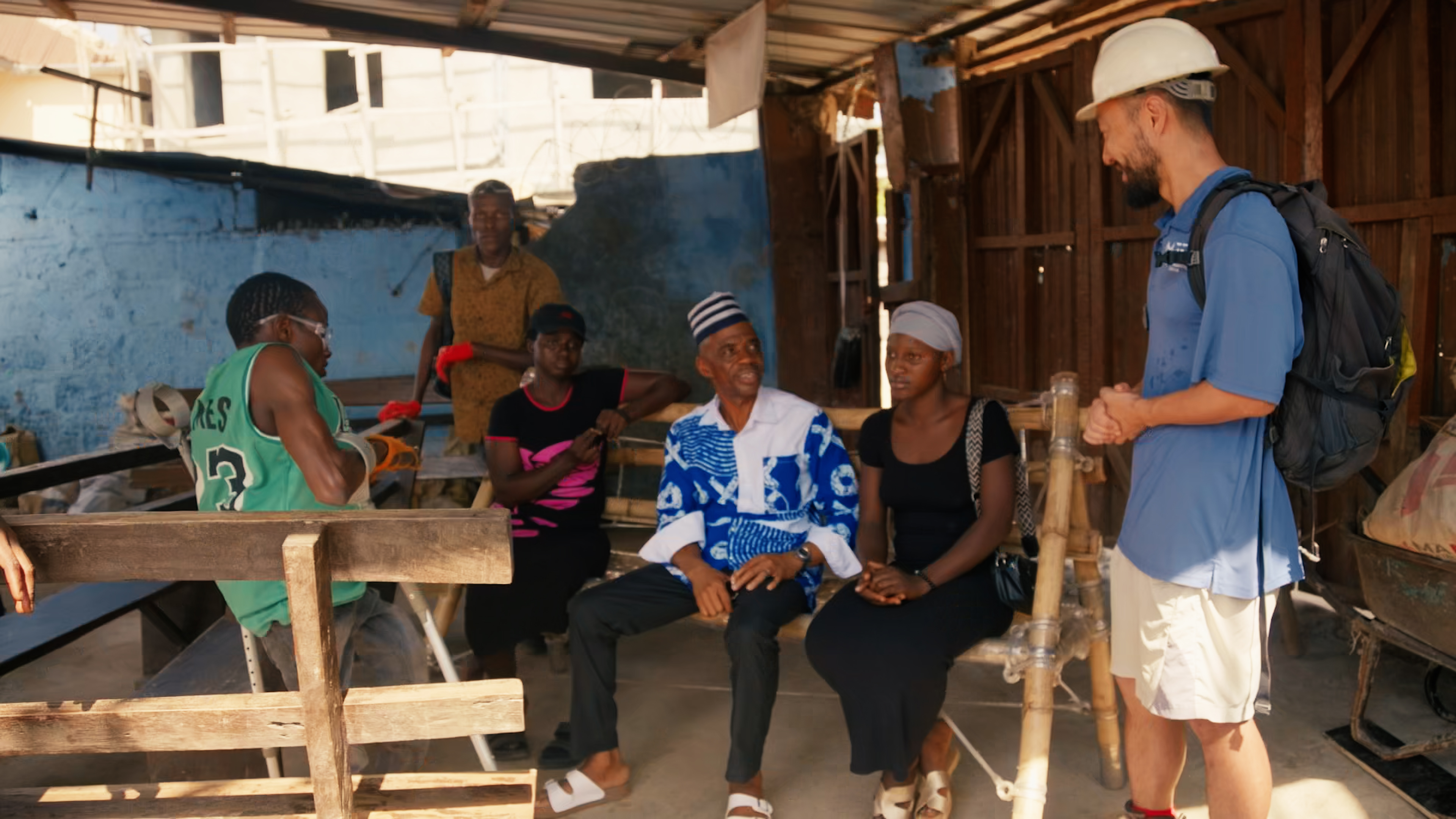
The best solution on paper is the one that a community can keep running for the next twenty years.
Listen first
Design begins with the people who live under the heat — not with an assumption.
Co-design
Materials, layouts and installation methods are shaped by local knowledge.
Local partnerships
We build with local organizations that already know their communities.
Local employment
Deployments create local jobs — installation, maintenance and monitoring.
Knowledge transfer
We share methods openly so communities can carry the work forward.
Capacity building
Long-term skills stay in the region long after a project ends.
06 · Building for scale
From a single roof to entire regions.
A solution that works on one building but cannot scale is not a solution to a global problem. MEER designs everything with deployment across cities and countries in mind.
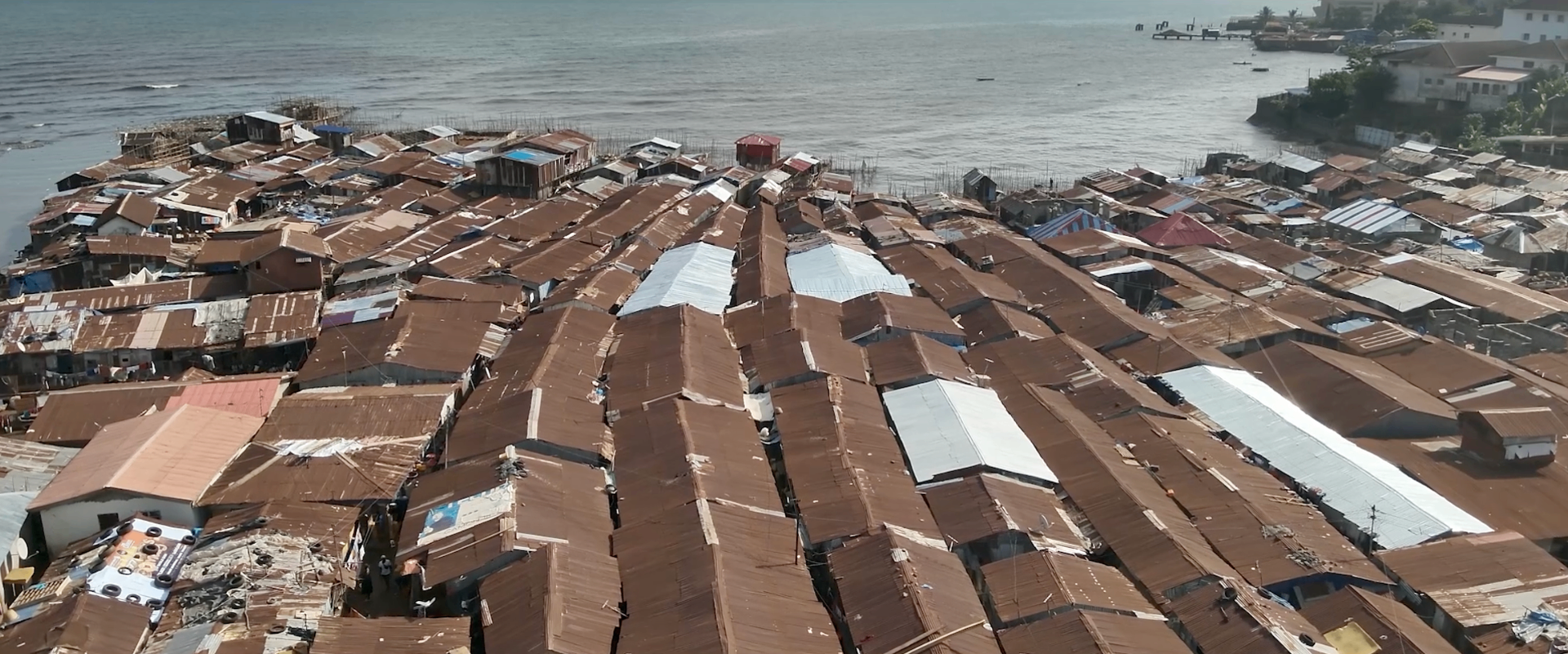
Affordability
If a solution is not affordable, it cannot reach the people who need it most.
Durability
Designed to endure intense sun, monsoons, dust and time.
Simplicity
Complex physics — simple to install, use and maintain.
Local manufacturing
Whenever possible, materials are produced close to where they are used.
Environmentally responsible
Non-toxic, low-impact materials with responsible end-of-life pathways.
Ease of maintenance
Serviceable with tools and skills that are locally available.
07 · Measuring everything
Meaningful climate work needs robust evidence.
Every deployment is also an experiment. Sensors, models and long-term field studies turn each project into evidence — and each piece of evidence improves the next generation of design.
If it isn’t measured, it isn’t proven.
Environmental sensors
Field measurements
Thermal monitoring
Engineering validation
Modelling
Long-term performance
08 · Collaboration at every level
We work alongside, not above.
Collaboration accelerates innovation and keeps solutions practical, credible and globally relevant. MEER works with:
09 · Putting it into practice
Where our approach takes shape.
Everything you have read here becomes visible — in the technologies we develop, the projects we run, and the science that guides them.
Build
Our Technologies
The materials, systems and instruments we develop.
Deploy
Our Projects
Community-led deployments across multiple continents.
Understand
Science
The physics of surface cooling — and the evidence behind it.
Why
Mission
Why MEER exists — and what we are here to change.
Where
Vision
The long-term future we are building toward.
Act
Support MEER
Fund the science, engineering and community work.